

If your fridge shelves have turned into a stacking game of leftover boxes and mystery jars, here is the short version: clear, pull-out storage fixes most of it. A telescopic pull-out bin — something like the ISSI DIARY Pull Out Telescopic Fridge Organizer — turns any flat shelf into a sliding drawer, and pairing it with one slim gap cabinet beside the fridge claims the awkward strip of space almost every kitchen wastes.
Below is what actually matters when you shop for fridge organizers, how to match bins to your shelf layout, and where the cheapest options stop being a bargain. The picks here are regularly updated as stock and prices change.
8 min read · regularly updated
- 1/8. Quick answer: what actually works
- 2/8. The pull-out telescopic organizer, explained
- 3/8. Five things that separate good bins from bad ones
- 4/8. Matching organizers to your fridge layout
- 5/8. Fridge organizer comparison
- 6/8. Keeping bins clean and odor-free
- 7/8. FAQ
- 8/8. The bottom line
1/8. Quick Answer: What Actually Works
Almost every frustrating fridge comes down to three problems, and each one has a proven fix:
- Things hide at the back. Fixed-depth shelves bury last night’s dinner behind a wall of bottles. A pull-out bin slides forward so you reach everything without emptying the shelf.
- Small items drift and tip. Jars, cheese packs and sauces end up in a pile. Clear bins with walls give every category a home you can see into from the front.
- The space beside the fridge goes to waste. That skinny strip next to the refrigerator is too narrow for a cabinet but perfect for a slim gap organizer, which is often where snack stockpiles and overflow bottles belong.
If you only buy one thing, buy the pull-out bin for your worst shelf. Everything else builds on it.
2/8. The Pull-Out Telescopic Organizer, Explained
The design is simple enough: a clear plastic bin with an extendable frame underneath. You set the width to match your shelf depth, drop it in, and the whole bin glides out like a drawer. No drilling, no tools, no removable shelf juggling.
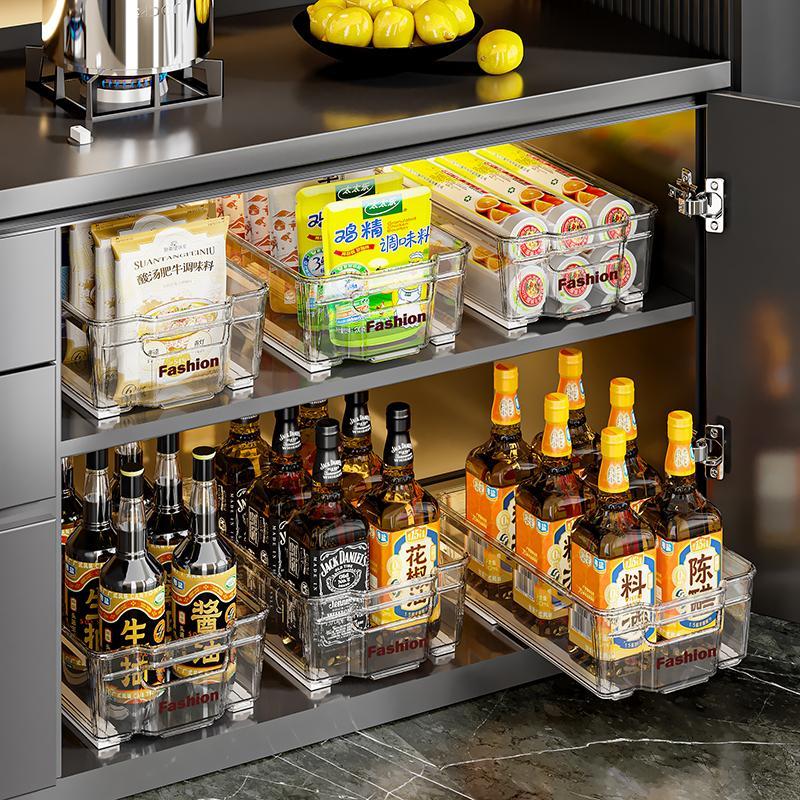
Why this beats a plain open bin: with a fixed bin, the jars at the back still require a fishing expedition. With a pull-out, the entire contents come to you. The front lip doubles as a handle, so one hand is enough even when the bin is loaded with full bottles. At around $7.10, it is also one of the least expensive upgrades in the whole category — cheaper than the takeout order you will avoid by finally seeing your leftovers.
It is not fridge-only, either. The same bin works in kitchen cabinets for snack pouches, in a pantry for seasoning packets, or under the sink for cleaning bottle caps and sponges. That flexibility matters because nobody’s storage problems stop at the fridge door.
Before you order, do a thirty-second measurement. Open the shelf, run a tape measure from the bracket at the back to the front edge — that is your usable depth. Then check the clearance between shelves and subtract a finger’s width for slide room. Telescopic organizers usually cover a range of depths, so a shelf that falls inside the adjustment range is a safe buy; anything borderline is not worth gambling on, because a bin that sticks out past the shelf front becomes a new way to bruise your hip every morning.
3/8. Five Things That Separate Good Fridge Bins from Bad Ones
Fridge organizers look interchangeable in product photos. In daily use, five details decide whether you will love it or quietly stop using it:
- Material and food safety. Look for food-safe, BPA-free PET or acrylic-style plastic with no chemical smell out of the box. Thin, bendy plastic cracks when a full jar lands in it; thicker walls cost a few dollars more and last for years.
- Visibility. Cloudy or tinted plastic defeats the purpose. Fully clear walls let you check stock at a glance, which is the single biggest reason organized fridges waste less food.
- Fit. Measure your shelf depth and the clearance above it before buying anything. Telescopic designs are forgiving on depth; height is less negotiable — a bin that blocks the shelf above becomes a daily irritation.
- Access. A front opening or pull-out glide means you can grab one item with one hand. Stackable designs should open from the front too, so the bottom layer is not held hostage.
- Cleaning. Smooth interior corners and no glued-in dividers. You will wash these bins more often than you expect, and crevices trap the sticky residue that makes fridges smell.
4/8. Matching Organizers to Your Fridge Layout
Not every shelf has the same job, so do not buy four of the same bin. Match the tool to the zone:
- Deep main shelves: this is pull-out bin territory. If your shelves run wide, the larger clear acrylic pull-out fridge organizer bin gives you more depth per slide, which is ideal for meal-prep containers and drink cans.
- Door bins: keep these for condiments and anything in squishy packaging. Doors are the warmest zone of the fridge, so milk and raw meat do not belong there.
- The skinny gap beside the fridge: a floor-standing unit earns its keep here. The 18cm slim transparent drawer organizer squeezes into an 18cm gap and gives you pull-out drawers for snacks, bottles or pantry overflow; the 20cm wide crevice storage cabinet adds shelved, layered storage when you have a slightly wider strip. Both also pull double duty beside a washing machine or in a bathroom corner.
- Freezer: flat, stackable clear bins keep frozen bags from avalanching. Label by category — proteins, vegetables, frozen treats — and the freezer stops being a lottery.

One practical tip: group by meal, not by container type. A “breakfast shelf” with yogurt, jam and eggs saves more time than any amount of color-coded matching bins.
And if your fridge is side-by-side rather than top-freezer, plan around the shallow shelves instead: narrow bins placed two per shelf, one for drinks and one for small food containers, work better than one deep bin that fights the width. The principles stay the same even when the measurements change.
5/8. Fridge Organizer Comparison
The four pieces above side by side, so you can see where each one earns its spot:
| Organizer | Best for | Price from | Watch out for |
|---|---|---|---|
| Telescopic pull-out bin (fridge) | Deep shelves, leftovers, drinks | $7.10 | Check shelf height before ordering |
| Large pull-out acrylic bin | Wide shelves, meal-prep containers | $7.10 | Heavier when fully loaded — lift with two hands |
| 18cm slim drawer organizer | Narrow gaps, snack overflow | $19.10 | Needs a floor spot, not a shelf |
| 20cm crevice storage cabinet | Gap beside fridge, layered storage | $10.70 | Fixed layers — measure ceiling height too |
Prices shift with promotions and variant sizes, so treat the column above as a starting point rather than a quote. If you are torn between two, start with the pull-out bin — it is the one you will notice every single day.
6/8. Keeping Bins Clean and Odor-Free
Clear plastic shows every smudge, which is annoying and useful at the same time. A quick routine keeps organizers looking new:
- Wipe bins weekly with warm water and mild dish soap while the shelf is being restocked — no need to empty the whole fridge.
- Skip abrasive scrubbers and harsh powder cleansers; they leave micro-scratches that turn clear plastic permanently foggy.
- Dry bins fully before they go back. Trapped moisture under jars is what creates that fridge smell nobody can locate.
- An open box of baking soda on the top shelf handles odors between cleanings.
If a bin does pick up a stubborn smell — garlic and kimchi are repeat offenders — wash it, then leave it open in the sun for an afternoon. Sunlight plus time pulls odors out of plastic better than any spray, and it costs nothing.

7/8. FAQ
Are clear fridge organizers worth it?
Yes, if your household regularly loses food to the back of the fridge. Seeing your stock is what actually cuts food waste; the tidy look is a bonus. Most people recover the cost of one $7 bin the first time a leftover gets eaten instead of thrown away.
How long do acrylic fridge organizers last?
A well-made PET or acrylic-style bin easily lasts several years of daily use. The failure points are cheap thin walls and overloading — a fully loaded bin dropped onto a shelf edge is how most bins die early. Treat them like dishware rather than tools and they outlast the fridge.
How do you clean a fridge organizer?
Empty it, wash with warm water and mild dish soap, rinse, and air-dry completely before restocking. For sticky residue or berry stains, a paste of baking soda and water left on for a few minutes lifts it without scratching. Avoid the dishwasher unless the manufacturer says it is safe — high heat can warp clear plastic.
8/8. The Bottom Line
Start with one pull-out telescopic bin on the shelf that annoys you most, add a second large bin once you see how much time the first one saves, and claim the skinny gap beside the fridge with a slim cabinet if your kitchen has one. That combination covers the vast majority of fridge chaos without reorganizing your entire kitchen.
For a wider view of storage formats — when racks, boxes and full cabinets each make more sense — the hub guide Storage Racks vs Storage Boxes vs Storage Cabinets breaks the trade-offs down. You can browse the full range of kitchen and dining organizers to compare sizes and finishes, or dig through more guides and room ideas in the ISSI Diary blog archive.